






The Complete Guide to Lifefactory Glass Baby Bottles — What Every New Parent Needs to Know
When you're preparing for a baby, the list of decisions feels endless. Glass or plastic bottles is one of the choices that genuinely matters, and once you've decided on glass, Lifefactory is where most parents land. But "glass baby bottle" is not a specific answer. What size? What nipple? What cap? And how does any of this change as your baby grows?
This guide answers all of it. Consider it the resource we wish we'd had on day one.
Why Parents Choose Glass Baby Bottles
The core reason is simple: glass is chemically inert. It doesn't leach BPA or phthalates into your baby's milk or formula, regardless of temperature, washing, or age. For a bottle that's going to be warmed multiple times a day and used for months, that peace of mind is worth a great deal.
There's a taste benefit too. Breast milk and formula taste exactly as they should in glass, with no plastic aftertaste and no absorbed odors from previous bottles. Many parents who switch to glass report that their babies take to the bottle more readily, particularly when transitioning from nursing.
And glass lasts. Unlike plastic bottles that scratch over time and need replacing, a well-maintained Lifefactory glass bottle can be used for multiple children across multiple years.
Understanding the Sizes
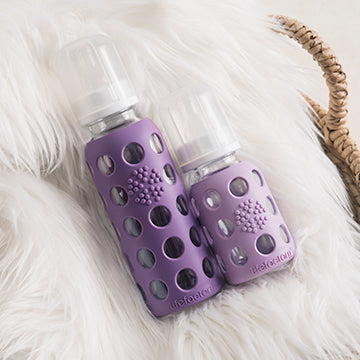
4 oz Glass Baby Bottle
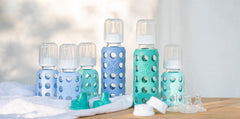
The 4 oz bottle is the newborn workhorse. Newborns eat frequently and in small amounts, typically 1 to 3 oz per feeding in the first weeks. The 4 oz is perfectly sized for these early feeds, light enough that tiny hands can eventually begin to hold it, and easy to maneuver during nighttime feedings when everyone involved is barely awake.
Most parents start with the 4 oz bottle and add the 9 oz size around weeks 6 to 8 as feeding volumes increase. The Lifefactory 4-Bottle Starter Set and 6-Bottle Starter Set both include a mix of 4 oz and 9 oz bottles, a sensible starting point for most families.
9 oz Glass Baby Bottle
The 9 oz bottle is the primary feeding bottle for most babies from around 2 months through the end of the bottle-feeding stage. It holds a full feeding for babies who've moved past the newborn stage and is weighted appropriately for older babies who are beginning to hold their own bottle.
The 9 oz bottle also transitions seamlessly into toddlerhood. Add a sippy cap and it becomes a toddler water bottle. Many families report using their 9 oz Lifefactory bottles daily for two, three, or even four years.
8 oz Wide Neck Bottle
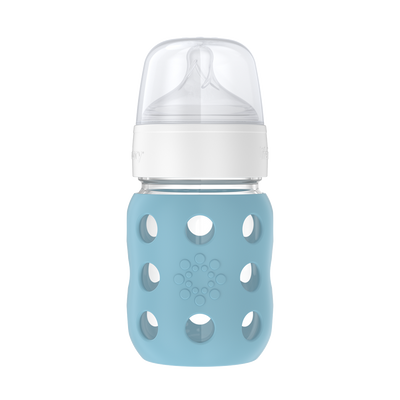
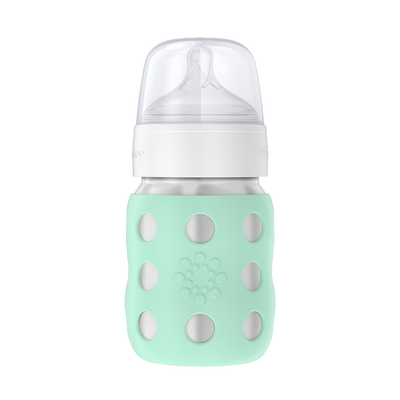
For parents who prefer a wider nipple base, which some babies find easier to latch onto, particularly those who are breastfeeding, the 8 oz wide neck bottle offers the same borosilicate glass construction and silicone sleeve with a silicone nipple that mirrors the breast shape more closely.
The Silicone Sleeve: More Than It Looks
Every Lifefactory baby bottle comes wrapped in a protective silicone sleeve, and it's worth understanding what it actually does, because it's easy to assume it's purely decorative.
The sleeve is made from silicone and serves two functions: impact protection, absorbing the shock of drops and bumps that would shatter unprotected glass, and grip, the textured silicone surface giving babies, parents, and caregivers a secure hold.
The glass bottle can be washed in the dishwasher on the top rack The sleeve stays on in the dishwasher.
The silicone sleeve is the reason so many parents are surprised by how rarely their Lifefactory bottles break. One family member described it as 'The bottle surviving everything a toddler could throw at it — including literally throwing it.'
Nipple Stages Explained
Lifefactory nipples are sized by flow rate, which corresponds roughly to your baby's age and feeding pace. Choosing the right stage matters. Too fast a flow can cause babies to gulp and swallow air; too slow can lead to frustration.
- Stage 1 (Slow Flow, 0–3 months): The starting nipple for most newborns and babies. Slow flow allows babies to pace their feeding, which is particularly important for breastfed babies switching between breast and bottle.
– Stage 2 (Medium Flow, 3–6 months): For babies who are feeding and begin to show frustration with the slower flow of Stage 1.
– Stage 3 (Fast Flow, 6+ months): For babies who are drinking larger volumes more quickly.
– Stage Y (Variable Flow, 6+ months): A cross-cut nipple that allows babies to control their own flow rate, which some parents find ideal as babies become more active and self-directed feeders.
Nipple stage is a guideline, not a rule. Follow your baby's cues, if they're gulping, gasping, or milk is leaking from the corners of their mouth, go down a stage. If they're working hard and getting frustrated, go up a stage.
The Cap System: How the Bottle Grows With Your Child
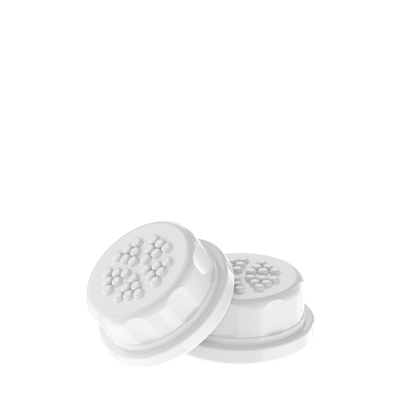
One of the most useful features of the Lifefactory system is that the 4 oz and 9 oz narrow neck glass baby bottles use the same storage and sippy caps.
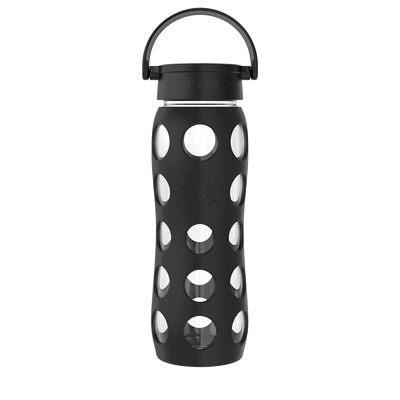
The 8 oz wide mouth glass baby bottles all use the same cap system. This means the hydration cap from a 16 oz adult water bottle fits the 8 oz baby bottle, and vice versa.
In practice, this means your baby bottle collection grows into your toddler and child collection without buying entirely new products. The path typically looks like this:
– Newborn to ~4 months: 4 oz bottle with Stage 1 nipple
– 4 months to bottle weaning: 9 oz bottle with Stage 2 or 3 nipple
– Toddler: 9 oz bottle with sippy cap
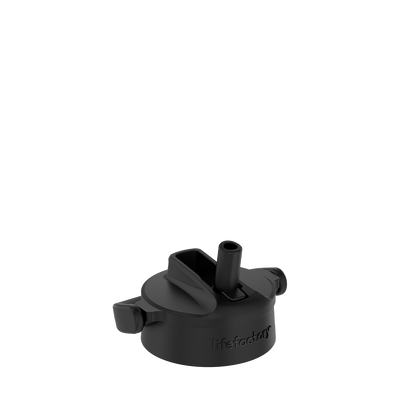
– Preschool/early school age: 8oz bottle with straw cap
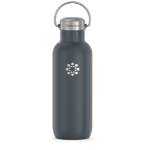
– School age through adult: 12oz, 16 oz or 22 oz water bottle with active cap
The financial and environmental logic is compelling: one glass bottle system, from birth through childhood, without replacement. Parents who understand this early often buy a set of 9 oz bottles at the baby stage and use them for years beyond it.
Cleaning and Care
Lifefactory glass baby bottles are dishwasher safe, top rack for the bottles, no need to remove the silicone sleeve. The nipples and caps should also go on the top rack.
For sterilization, the glass bottles can be boiled or steam sterilized. Glass will remain unchanged unlike plastic which can warp or degrade with repeated high-heat sterilization. The silicone components are also heat-safe.
A bottle brush is helpful for washing by hand, particularly to clean around the shoulder of the bottle where residue can collect. Rinse immediately after use to prevent milk residue from drying and becoming harder to remove.
How to Get Started
For most new parents, the best starting point is the Lifefactory Starter Set, either the 4-bottle or 6-bottle version. These include a mix of 4 oz and 9 oz bottles with a variety of nipples and caps, giving you everything you need to get started without over-investing before you know your baby's preferences.
If you already plan to build out the full system, with baby bottles that transition into toddler and child bottles, adding a few 9 oz bottles from the start is a smart choice. They’ll serve you well past the baby stage.
Shop the Lifefactory Glass Baby Bottle collection at lifefactory.com/collections/glass-baby
Frequently Asked Questions
Q: What size Lifefactory baby bottle should I start with?
A: For newborns, start with the 4 oz bottle. Most parents add the 9 oz size around 6 to 8 weeks as feeding volumes increase. The Starter Sets include both sizes, which is the easiest way to begin.
Q: Can I use Lifefactory baby bottles with breast milk?
A: Yes, glass is ideal for breast milk storage because it's chemically inert and won't affect the taste, smell, or composition of the milk. Many parents use the 4 oz bottles for both feeding and milk storage.
Q: Are the bottles safe to warm?
A: Yes, Lifefactory borosilicate glass bottles are thermal shock resistant and safe for warming in a bottle warmer or warm water bath. Do not use in the microwave as this can unevenly heat the bottle.
Q: What nipple stage should I start with?
A: Stage 1 (Slow Flow) for most newborns. This allows babies to control their feeding pace, which is particularly important if you're also breastfeeding.
Q: Can my older child use the baby bottles?
A: Yes, this is one of the best features of the Lifefactory system. The baby bottles have a variety of caps to use. Simply swap the nipple for a sippy or straw cap as your child grows.
Q: Are Lifefactory bottles dishwasher safe?
A: Yes, Lifefactory bottles are dishwasher safe, no need to remove the silicone sleeve. Use the top rack for best results. Nipples and caps should also go on the top rack.